BLOG · PSICOLOGÍA BREVE Y ESTRATÉGICA
Por qué los hombres preferimos afrontar los problemas solos (y cuándo eso se convierte en un problema)
Te explico por qué ocurre, cuándo y cómo identificar si es justo lo que está aumentando tu problema.
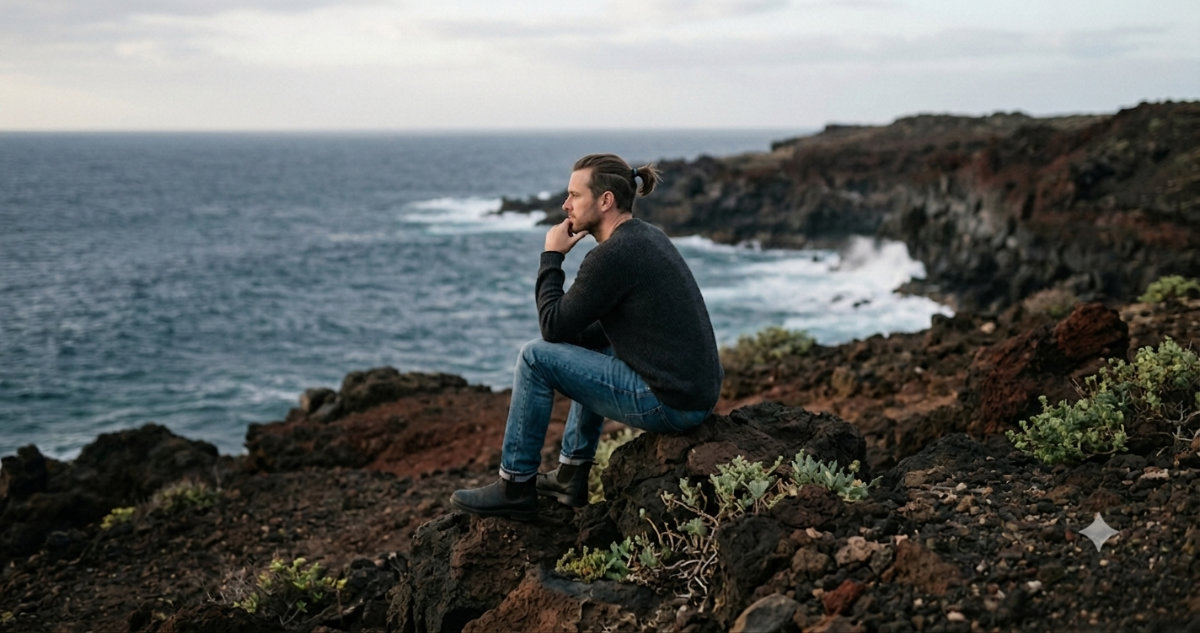
¿Te resuena?
Si has llegado hasta aquí, algo te ha hecho clic.
El siguiente paso es avanzar. No hace falta que tengas las palabras perfectas: escríbeme por WhatsApp en audio o texto y cuéntame tu situación. Hablamos antes de agendar nada. Quiero saber que encajamos.
Referencias citadas en este artículo:
- Rosario, M., Shinn, M., Morch, H., & Huckabee, C. B. (1988). Gender differences in coping and social supports: Testing socialization and role constraint theories. Journal of Community Psychology, 16(1), 55–69.
- Fink, A., & Exenberger, S. (2022). The impact of coping styles and gender on situational coping: An ecological momentary assessment study. Frontiers in Psychology, 13, 913125. https://doi.org/10.3389/fpsyg.2022.913125
- Matud, M. P. (2004). Gender differences in stress and coping styles. Personality and Individual Differences, 37(7), 1401–1415. https://doi.org/10.1016/j.paid.2004.01.010
- Carbone, E., Goldberg, A. E., & Gabriele, S. (2024). He said, she said: Gender differences in the disclosure of positive and negative information. Journal of Experimental Social Psychology, 104, 104525. https://doi.org/10.1016/j.jesp.2023.104525